Lately, much of my off time has been pre-occupied with a great experiment. A few weeks ago, I decided to finally pull the trigger on a Switch 2, my first time owning a Nintendo system since the SNES and GameBoy Color, and my first time playing on one since the N64 was still a smash hit at parties.

For the most part, it’s been a positive experience. I love that it’s a much larger screen and less hefty device than my original SteamDeck, not that the battery life is significantly different. I’ve found it remarkably nice for playing handheld on the couch, and has actually caused me to use my SteamDeck in handheld much more frequently. Unlike my laptop and ‘Deck it can actually be docked in the TV console upstairs without making me grumble about the tight spaces, which is also a plus.

In terms of graphics and power, it’s kinda of a “Meh” factor. Many of the games already out on the platform encompass things that have had Steam and Xbox One / PlayStation 4 releases. Often ones that also run on SteamDeck either perfectly or with a little fiddling. The difference of course is the Switch 2 is more apt to target 1080p, which makes me happier because I often play docked to a large 4K screen. I consider the main advantage there that it’s now “Good enough” hardware rather than as limited as the Switch and its revisions. Plus, nVidia’s DLSS tech and stuff is definitely better.

Hardware has been pretty solid, but I have to preface that with “Depends on what you play.” The Joy Cons 2 seem to be pretty decent controllers for handheld mode, but not as good as Steam Deck’s superb (but integrated) controller. For more FPS oriented games like Resident Evil, frankly, the Joy Cons 2 sucked so bad that I turned right around and ordered the Pro 2 controller. That’s closer in quality to an Xbox One or Series X/S controller. I honestly don’t care about the detachable controller aspect, but if you’re more prone to playing games like Pokemon and Mario than games that require fast, precise aiming (basically any first person and most third person shooter), they’re great for the former and crap for the latter. On the flip side, gyro aiming support is actually native for many Switch/Switch 2 titles.

One of the things I’ve been happy for, is that the eShop has a much larger variety than I expected. Quite a few games I’d play are available through the Switch back catalog, except I already have them on other platforms. I was a bit concerned that options would be smaller beyond Nintendo’s own first party releases.

Game Cards, I remain somewhat on the wall about. For games that actually use them, I don’t really mind. The downside of course is that many third party games are either digital (shop / code-in-a-box) or Game-Key Cards. For those, the only real value IMHO is the second hand market. You can trade in the card, but unless you’re frequently trading 3-5 games whenever you buy 1, it’s probably a bigger deal when for you cash out. I.e., if you migrate to an incompatible platform like PlayStation, it makes sense to dump the games with the console. That said, my childhood is proof that trade-ins and pre-owned are a perk when money is tight. In which case, you probably should get anything other than a Nintendo Switch–the games are frakking expensive.

Conceptually, I like the idea of Game Cards. They’re a similar size to full SD cards, making them practical in ways that a MicroSD is too damned tiny. Likewise, that avoids the problem that earlier Game Pak / Game Card are too bulky when you’ve got a lot of them to carry. Honestly, I’ve never been a fan of the install to hard drive model for game consoles: may as well use a PC and pure digital distribution if that’s how it is.

Of course the reality is the inverse. For first party games, the benefit is much smaller updates. For a game that’s around DVD/DVD DL scale, the update might be closer to 500 MB stored to internal storage. That’s been the case for Mario/Zelda/Pokemon games that I’ve tried so far. IMHO, that’s a fair compromise for saving 4-8 GBs per game.

For third party games, the reality is you may as well be digital and expect to have to download the entire thing. On the flip side, I’ve found that games are often smaller. Many are in the HD DVD to Blu-ray SL scale as opposed to Blu-ray DL and up, meaning they’re well suited to a 16G or 32G Game Card if they actually used the card for storage. It seems many publishers have dropped unnecessary assets when baking games for the Switch platforms.

For example, Resident Evil 9 is a Big Freaking Game™️ on Steam if your storage is measured in GB, but basically a standard size for modern games. If you like PC gaming, you measure your storage in TB, not GB. It’s about 80 GB on PC, and I had expected it to be over 120 GB when I pre-ordered. On Switch 2, it’s under 30 GB! There’s some irony in that as well. On Switch 2, we’re basically running a DLSS upscale to 720/1080p from about half that resolution. Docked, it’s no where near as nice as my laptop’s 4K output. I wouldn’t be surprised if SteamDeck offered equally limited graphics at best, but you’re still stuck downloading the entire shebang because the game’s assets have to cover everything from the lowest supported potato to the beefiest they’ve got.

That’s actually one thing I kind of like about consoles, since it’s a stable target, you’re basically locked, cocked, and ready to rock from the beginning. No fiddly. But, it’s also going to be inferior rendering to a beefcake PC that can throw 3 pounds of RTX at the problem. For me, it’s become more about input methods in many cases; e.g., I greatly prefer to play certain games with a mouse and that typically leaves PC as the only platform. Playing Doom 2016 on an Xbox One for example was a painful experience compared to PC, where the controller is optional.l

Well, that’s enough rambling for now.
The Insane Engineering of the Gameboy

Nice video giving an overview of the classic handheld’s architecture. The opening may be a little bit harsh IMHO, but also not unwarranted. At least, the way that I look at it the hardware is closer to what a microcomputer could have passed for just over a decade prior, and devices like the Apple II or TRS-80 were hardly portable and battery friendly devices.

That’s a trend that I think largely tends to continue with really portable devices. I remember looking at data about the first Raspberry Pi, and decided it would likely be on par with a ten year old PC — except closer in size to a credit card than a microwave oven, and pretty darn cheap. Likewise, while I find the Steam Deck’s graphics very unimpressive, I find it amazing that someone crammed an Xbox One level of horse power into such a portable package.

It’s pretty darn cool how that sort of evolution plays out, even if my wrist watch literally has an order of magnitude more computing power than my first Personal Computer….

Xbox Gaming Lead Still Doesn’t Understand The Nintendo 64 Controller

That kind of maker two of us. I always found the N64 controller confusing and old feeling compared to the previous generation of consoles. By contrast the Play Station controller was pretty natural, and easily picked up by a kid accustomed to the Super Nintendo and Sega Genesis. Adding the analog sticks in the Dual Shock configuration didn’t change that.
Actually one of my minor grumbles when I bought the original Xbox One was the controller. The Xbox One controller is fairly familiar but swaps the D-Pad and left thumb stick from what you’d remember on the old Dual Shocks.
The times I’ve used an N64 controller, well, let’s just say I tried not to have to move my grip 😜.

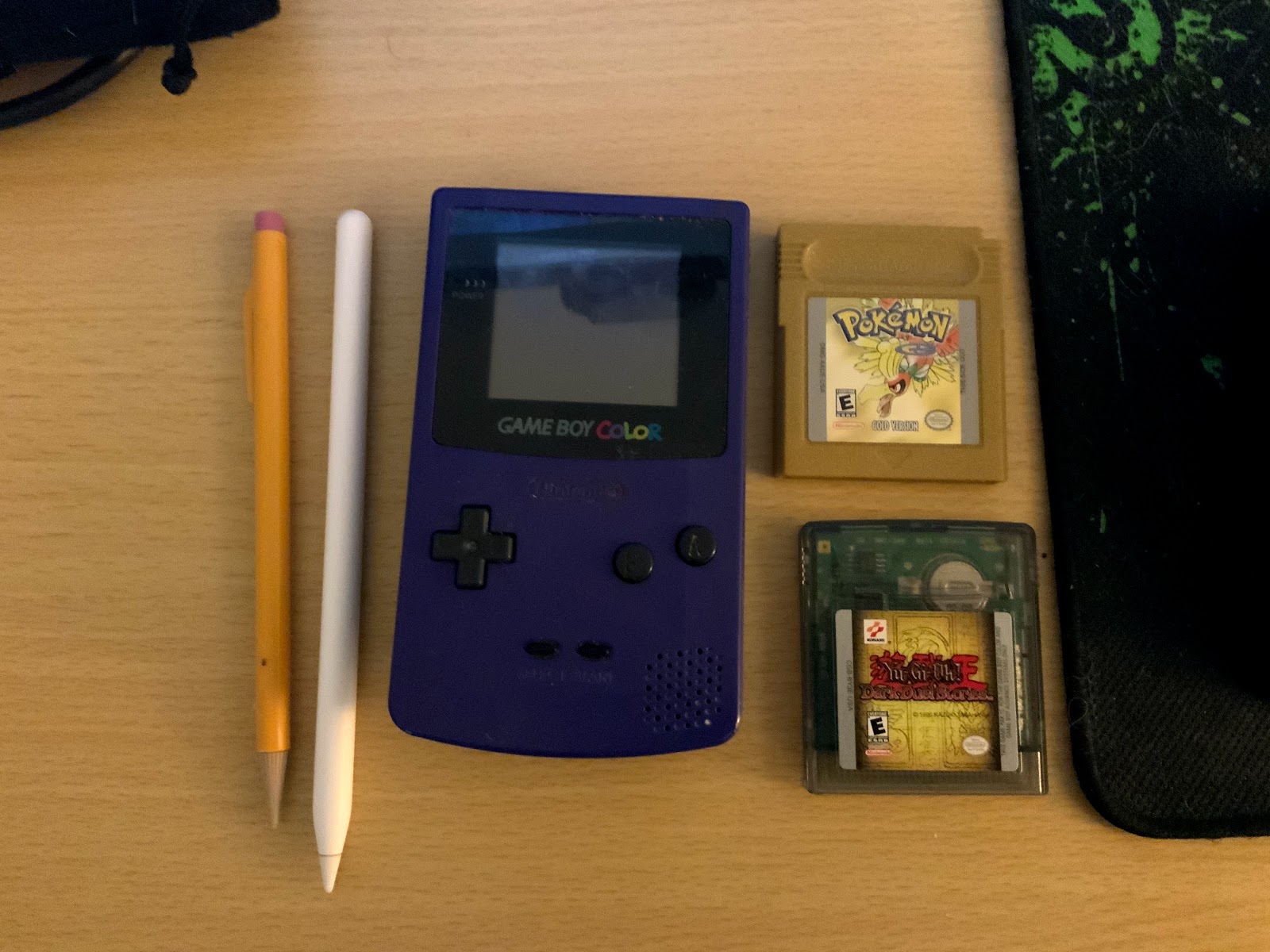
 On a whim decided to boot up my old Game Boy Color since I was looking for the pencil box it lives in. Don’t think I had turned it on in a good decade, lustruum at least. Figured it would be a good first test of my new rechargeable batteries, and answer the question I’ve posed for a couple years now: does it still work?

Much to my surprise it, and joy, it powered on. Had to try and boot the Pokemon Gold cartridge at least three times to get passed the firmware’s boot screen; lack of a continue game makes me assume the coin cell must be dead. The Yu-gi-oh cartridge however booted straight away and still offers a continue button in the menu.

As far as I can tell: it seems fully functional. Pretty sure that the screen is a hell of a lot more dim then it was 21~22 years ago when my mom bought it for me at the pawn shop. But 90s era LCDs are kind of known for that, and I still find it pretty impressive that so much fun could be housed in such a small for its day, and still rather lightweight package.

Misty is not sure what to make of this odd device that looks like an oversized phone. But knows she can’t eat it.

Nintendo has a cloud problem

While from a distance, I think Nintendo has done pretty well to modernize themselves: the fact remains that they’ve still got a long way to go.

Sony has evolved considerably since the PlayStation arrived in the ‘90s. I don’t think anyone ever envisioned how successful that would go. But personally, part of my choice of the Xbox One over the PlayStation 4, comes to being a third party that looked upon PS3’s account and service bits as reasons why I never want to give Sony my billing information.

Microsoft by contrast has been in computer and network crap for virtually ever, as far as PCs go. For what they sometimes lack in the gaming scene, they make up for in being competent at running consumer services where you give them money for it.

Nintendo on the other hand, don’t have a long record of fancy smancy consumer services or backend infrastructure for all of that. It’s increasingly part of modern gaming, but it’s just not their bread and butter. The Switch seems to represent a major leap forward in their thinking, but it’s still a Nintendo.

The Lie That Helped Build Nintendo

I’d really like to imagine that the banker must have shit himself when Bergsten bro he’s the topic of the 10,000 units. But I reckon things turned out pretty well for everyone in the end, lol.

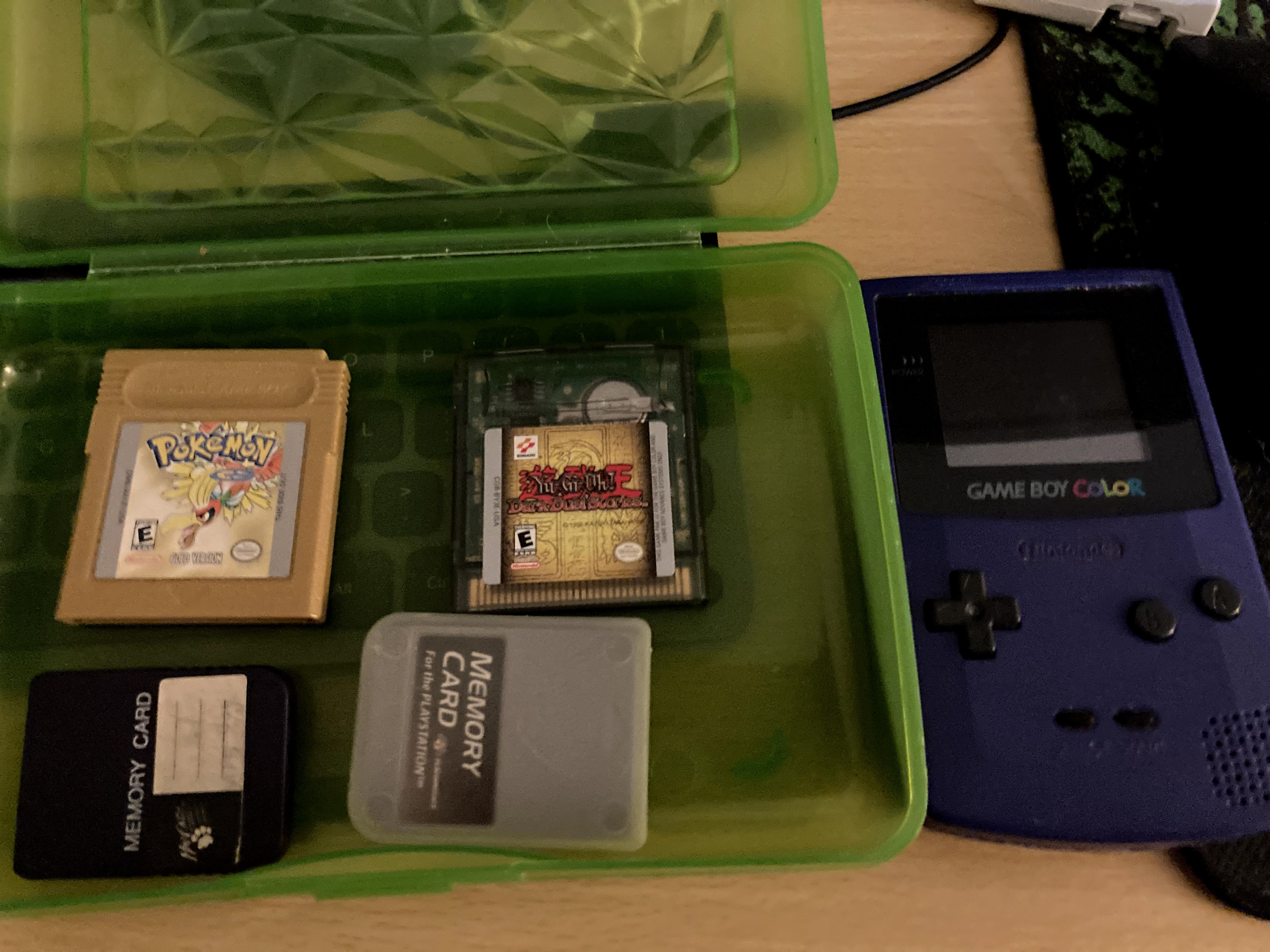
Not sure if it’s better or worse, that my temptation to put batteries in this is tempered by wondering where the heck my other cartridges went.

It’s been in an old green pencil case for plenty of years, which was also home for my PlayStation and PS2 memory cards, but I only found two cartridges :/.

Mechanical and Apple pencil shown for scale. It’s about the thickness of three pencils :P.

A good Game Boy video

Retro Tech: Game Boy

This kind of makes me feel old, and tempted to root around in my closet.

A long, long time ago in a childhood increasingly far away, I remember what mobile gaming was like. More than a bit of my childhood involved being stuck in the back of a car, bored for the duration, or stuck waiting places. Needless to say it was more remember to bring your shit with you than remember your phone charger. ‘Cuz if T-800 and Cpl Hicks lost their guns, you weren’t going back, lol.

Mobile gaming when I was little was something more like Tiger’s hand held games. I’m pretty sure that Double Dragon passed more than a few hours of my early childhood. And then there was Game Boy and Game Gear. Those were cool. More often than not, mobile gaming was borrowing my grandmother’s deck of cards, which didn’t require more power than daylight.

My first “Real” video gaming system of my own, was the Super NES. Between the original NES my brother and I played, and the THHGs I was used to, I came very close to choosing the original Game Boy for my first system, but in the end the green screen balanced me in favor of a more traditional console. The Super Nintendo had plenty of pretty colours, and Super Game Boy was eventually a thing anyway.  Some time later my brother would also end up with a Sega Game Gear, but that was short lived.

Most of my time with the Game Boy turned out to be the later Color model. My mother bought me a purple Game Boy Color out of the local pawn shop around the time Pokemon Red & Blue were still young in America, and I still have that GBC in my closet. Along with my Pokemon Blue cartridge, and other games. Before the rise of the affordable smart phone, more than a bit of time spent waiting someplace, I passed either reading books or playing on my Game Boy Color.

CNET: Nintendo Switch’s new SNES feature is ruining everything.

After reading this, I’m not sure if I should grumble or snortle for a number of reasons. But when I remember the difficulty of video games from my era, I kinda picture children today in tears.

My theory still is time oriented.

Big dollar games come out all the time. You play them. You move on. That’s what the industry wants. Games these days begging easier, some of that is good design and some of that reflects that we won’t be playing it very long.

By contrast the games I had as a child, all had long shelf lives. When I got my SNES, I played Super Mario World and Super Mario All Stars pretty often. Those were new, cool things when I was a little kid. When my SNES finally was retired, closer to the PlayStation 2 era than the N64, I still played them.

I remember a card game that I played around middle school age, called Yu-Gi-Oh. My Game Boy cartridge is sitting in the closet somewhere next to Pokemon Blue and Gold. You see, I used to play that Yu-Gi-Oh cartridge a lot. One day I figured out how the really simple A.I. worked. No matter what the long game looked like, the A.I. would calculate the best response to your move. Knowing this, it didn’t take much crunching to decide how to manipulate the A.I. and defeat it. Always.

Why did I stop playing that cartridge? Was it because I lost my interest in the card game? Nope. In fact, I still enjoyed the trading card game for a number of years after that. I stopped playing the video game version because it was too damned easy. It went from passing time with some fun to wasting time with no fun. Thanks to removing the challenge.

By contrast, the only thing that really changed about how I play Super Mario Bros is the words I shout at the screen 🤣. When I revisited the game in my twenties, I wondered how I didn’t smash it, and then remembered how hard it was to get new video games back then. Hehe.

Circuit Breaker: A brief history of cutdown game consoles.

While only brief in that it’s limited to Nintendo, Sony, and Microsoft: the modern names in the console gaming business, it is never the less a good write up.

I also find it interesting how times have changed. The way I encounter such revision has changed more than the patterns too the hardware alterations.

The alterations to the earlier NES and PlayStation consoles were things that I first encountered in stores, or later read about (PS2 Slim) after the fact. Seeing such things in stores were head scratching events. More recent history such as the PlayStation 3 and Xbox 360 iterations are principally things I’ve only encountered online because I skipped much of that generation. Current affairs like the One S are both things I’ve usually read about online ahead of time and have also encountered personally.

Growing up, I was pretty much exposed to everything Nintendo and Sega offered in the United States until the great dominance the Sony PlayStation achieved, and I mostly exited mobile while the Game Boy Color was still getting new titles.

Somewhere in the early 2000s, I kind of made a switch away from consoles. If they interested me: I would still buy games for the PlayStation 2. But by in large my gaming activities became focused on PC. Thus while my peers were typically (original) Xbox converts: I had returned to the desktop. Up until the late ’90s our PC was limited to MS-DOS 3 and a single 5 ¼ floppy drive, so it wasn’t hard for consoles like the Super NES and original PlayStation to ingrain themselves in my gaming habits and draw me away from our Tandy. Around when Medal of Honor: Allied Assault was young and popular: we finally gained a PC up to playing modern games. That remained the pattern and is again my norm.

It was actually my brief but multi year affair with the first model Xbox One, that I had experienced a console younger than the launch model PlayStation 2. Platforms like the 360 and PS3 are ones I either skipped totally or only experienced through games ported to PC or Xbox One backwards compatibility.

Seems the popularity of game consoles hasn’t stagnated over the decades. Changes to make the hardware cheaper as the platform ages of still the norm. But the way that I learn about them has.

On the flip side it seems like the hardware reliability has also largely remained the same, since Deathstar One remains fully operational. Despite its growing age and my focus returning to PC. Underneath my Xbox One is a Steam Link and a PlayStation 2, non slim. The PS2 still works just as well as the Christmas I first played Ghost Recon on it. Ditto for the GameBoy Color in my closet, sitting next to a Pokemon Blue and Yellow cartridge. This stuff tends to last 😁. Although I do wonder when analog A/V inputs will disappear from televisions, lol.